
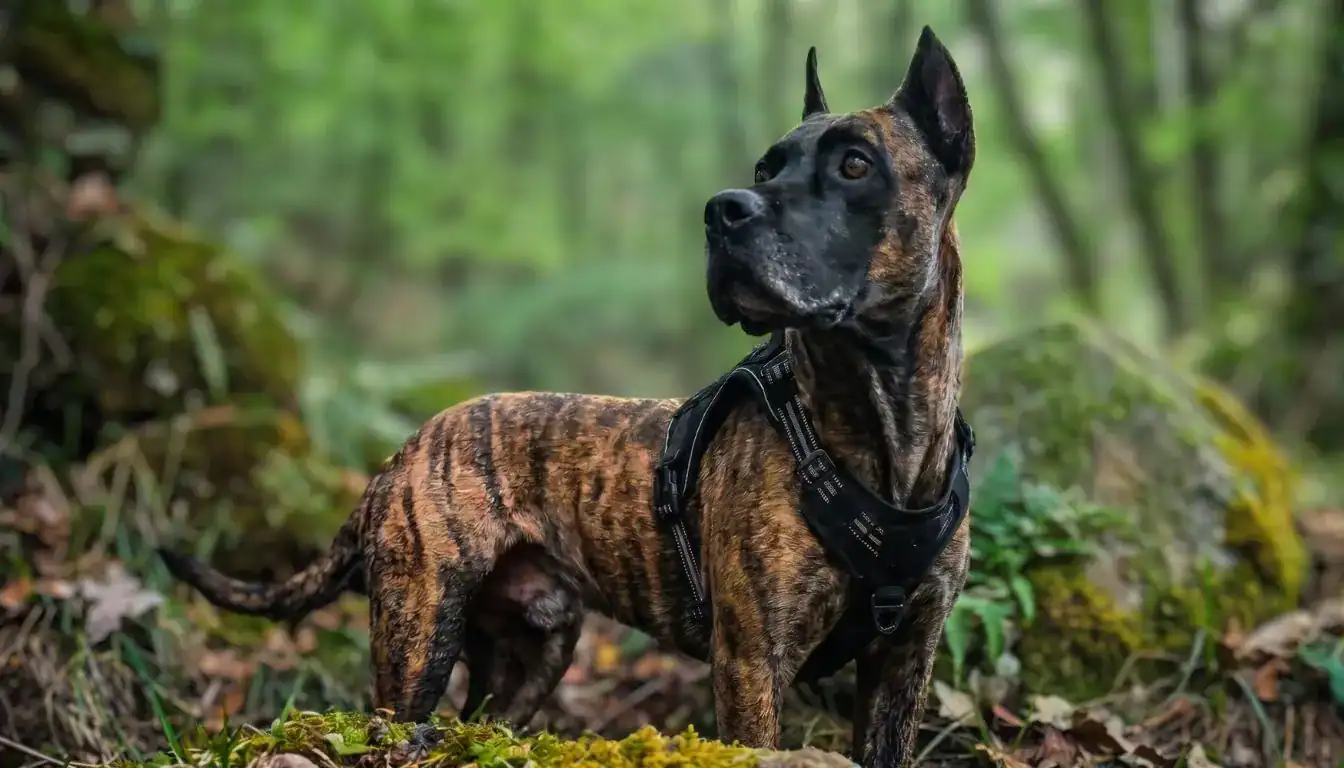
The Villanuco de las Encartaciones is a small ratter from the Las Encartaciones comarca of Bizkaia in the Basque Autonomous Community in northern Spain. The Villanuco served farmers as a barn ratter and a “door alarm” on rural caseríos for centuries before mid-20th-century shifts in agriculture pushed it to the brink of extinction.
Most outsiders confuse the petite Villanuco with the far larger Villano de las Encartaciones, a sturdy catcher used to grip the heads of Monchina bulls. Those two letters of difference (the diminutive “-uco”) signal a different breed entirely. The Villanuco is a 5-to-8.5-kg compact ratter rather than a 28-kg catch dog.
This guide draws on Real Sociedad Canina de España (RSCE) records, Basque rural development plan documentation, and OFA orthopedic screening protocols for similar Iberian lines to lay out exactly what life with this endangered Villanuco demands.
Daily commitments include 45 to 75 minutes of focused outdoor time, secure containment around small pets and backyard wildlife, weekly brushing, and consistent boundaries to prevent the sharp alert barking from becoming a constant pursuit. Households that ignore the ratter drive typically end up with a vocal, restless animal within months.
For families ready to accept a scarce conservation animal with intense ratter drive, the Villanuco offers 12 to 14 years of devoted companionship, sharp alertness, and a piece of historical Basque heritage. For households expecting a quiet lap pet or easy starter pup, another companion may suit far better.
Affiliate Disclosure: K9Sphere is a participant in the Amazon Services LLC Associates Program. As an Amazon Associate, K9Sphere earns from qualifying purchases made through links in this article at no extra cost to you.
Breed Snapshot
📊 Vitals and Lifespan
Height
Males: 12-16 inches (30-40 cm)
Females: 11-15 inches (28-38 cm)
Weight
Males: 13-19 lb (6-8.5 kg)
Females: 11-16 lb (5-7 kg)
Lifespan
12-14 years
Breed Group
Ratter / Pinscher classification (RSCE Group 2)
Origin
Spain (Basque Country)
🇪🇸
⭐ Personality Traits
Ratings (1 to 5). This rare Basque ratter packs intense prey drive and sharp alert instincts into a small, agile frame, balanced against suspicion toward strangers and intense prey drive toward small animals.
History and Origin
The history of this Basque ratter is bound to the rural caserío farmsteads of la comarca de Las Encartaciones in Bizkaia. The villanuco de las encartaciones es una small farmhouse dog, and in formal Basque documentation, las encartaciones es una raza de perro reconocida by the 2001 Basque government decree of traditional native lines. For generations, every farm in en el norte de españa kept a small ratter to protect grain stores and serve as the household alarm. The Villanuco filled this role while its larger relative, el villano de las encartaciones, tended Monchina cattle. El villanuco de las encartaciones is one of five Basque lines documented in regional records. El villano de las encartaciones es un perro de cattle-catching type.
📌 19th Century: Ratter Roots
Small ratters known locally as “ratoneros” (rat-catchers) were essential to the rural Basque economy. The Villanuco evolved as the cleaner of the caserío, dispatching vermin from grain stores while alerting families to strangers approaching the door. Phenotypic similarity to the Ca Rater Mallorquí and the Gos Rater Valencià suggests shared ratter ancestry across the Iberian peninsula.
📌 Mid-20th Century: Near Extinction
The arrival of imported “fancy” foreign lines nearly wiped out the Villanuco. Farmers replaced their native ratters with Fox Terriers and Chihuahuas, and changing agricultural practices reduced demand for barn ratters. By the late 20th century, the population was critically endangered.
📌 2001: Basque Recognition
The Basque government issued a decree formally recognizing the Villanuco as a traditional Basque line, alongside four others. This step put the breed on the official cultural register and unlocked support for documentation efforts in the towns of Artzentales, Balmaseda, Güeñes, Karrantza, Sopuerta, and Trucios-Turtzioz, where almost all surviving examples were found.
📌 2007-2013: Conservation Plan
The Villanuco was added to the rural development plan (programa de desarrollo rural del país vasco) for the period 2007-2013. The plan covered fourteen indigenous animal lines. Despite this support, a 2009 census reported fewer than fifty individuals, confirming the population’s critically endangered status. Recovery efforts continue under conservation programs in Bizkaia and Álava.
Physical Characteristics
These animals are built compact and agile, designed to turn on a dime in the tight spaces of barns and grain stores. The frame is “brevilineal” in Spanish kennel terms, meaning compact and broad rather than elongated, with dry, defined musculature that supports rapid pursuit and quick directional changes.
🎨 The Tight Ratter Hair
The single hair layer sits a touch over one centimeter against the body, tight and harsh to the touch. This texture is functional, not cosmetic. It offers no place for a cornered rat to grab hold during a fight. Unlike fluffier companions, the dense fur drops hair minimally and requires only weekly brushing maintenance.
🏗️ Compact Athletic Build
The body is small but never fragile. Males stand 30-40 cm at the withers and weigh 6-8.5 kg, with females slightly smaller. The chest is powerful for the size, the tail carries in a sickle shape, and the V-shaped ears stand erect on an alert wedge-shaped head. This is a ratter packed into a toy-sized footprint.
The Color Question
Standard colors are predominantly black-and-white or black-and-tan, with the tan covering the muzzle, eyebrows (the “four-eyed” look), legs, and underside. Less frequent variations include black-and-cinnamon, white-and-cinnamon, and tri-colored. The nose is usually black, but chocolate-colored noses appear with liver-and-tan lines. Skin is fine and close-fitting against the compact frame.
Character and Temperament
These animals are intensely curious and highly reactive to their surroundings. Every sound at the door, every movement in the yard, and every unfamiliar visitor triggers an immediate vocal response. Their reputation as “door dogs” was earned through generations of guarding. They alert at the slightest hint of strangers approaching, with a piercingly loud bark that defies their small size.
🔊 Sharp Alert Barking
The Villanuco takes its early-warning role seriously. A passing footstep, a delivery person, or a backyard squirrel will trigger sharp persistent barking until the handler acknowledges the alert. This is hardwired watchdog conduct, not random noise, and it responds to structured “quiet” command training started in puppyhood.
🛡️ Intense Prey Drive
Generations of ratting genetics remain fully present. The Villanuco will instantly chase rodents, squirrels, rabbits, and small cats with single-minded focus. Off-leash work in unfenced areas is genuinely dangerous because the pursuit instinct overrides recall when prey appears. Households with pet hamsters, rabbits, or guinea pigs face unmanageable conflict.
👨👩👧 Devoted to Handler, Wary of Strangers
The Villanuco is described as gentle and affectionate toward its handler but reserved with strangers, and protective of its household. Bonds form quickly and run deep with the primary handler, but visitors typically face a barking welcome and an extended warm-up before the Villanuco accepts contact. Early socialization to varied humans is essential to prevent over-defensive or aggressive responses. The Villanuco’s natural household security drive makes it a serious early-warning system rather than a passive companion.
🧠 Independent Working Intelligence
The Villanuco learns quickly but tests boundaries persistently. As a ratter that historically had to make split-second decisions facing a cornered rat, the Villanuco is built to think independently. Without consistent leadership from day one, the Villanuco will run rings around an inexperienced handler and dictate its own routine within weeks.
Screening and Conditions
Veterinary Disclaimer: The information provided in this article is for educational purposes only and is not intended as a substitute for professional veterinary advice, diagnosis, or treatment. Always consult a licensed veterinarian for any concerns about your pet.
Health Information Sources: Data compiled from:
- OFA (Orthopedic Foundation for Animals): Recommended orthopedic and genetic testing protocols for similar small ratting breeds
- Real Sociedad Canina de España (RSCE): Breed standard documentation and parent-club guidance for the Villanuco
- AVMA: Clinical research on small-pet orthopedic and dental medicine
Always consult your licensed DVM for personalized medical advice.
As an unusual landrace shaped by natural selection on rural farms, the Villanuco is generally considered hardy and robust. Generations of survival in demanding rural conditions favored animals free of major structural defects. However, the small founding population and limited veterinary data mean some inherited concerns common to comparable Iberian lines remain plausible risks. Strict parental screening through OFA-approved tests is the primary safeguard.
Common Inherited Conditions
🔴 Patellar Luxation
What to watch for: The kneecap slips out of its groove, causing the dog to suddenly hop or skip on one hind leg before the kneecap pops back into place. This is the most documented orthopedic concern in compact actives and warrants attention in any compact ratter.
Screening: OFA patella evaluation of both parents is recommended before breeding. Repeated dislocation accelerates cartilage wear and leads to early-onset arthritis. Adding a quality hip and cartilage supplement supports joint maintenance.
🔴 Legg-Calvé-Perthes Disease
What to watch for: Decreased blood supply to the femoral head causes the bone to deteriorate, leading to progressive pain and lameness in one rear leg. Onset typically appears between four and ten months of age. Affected youngsters appear suddenly reluctant to bear weight, jump, or use stairs.
Screening: OFA hip evaluation is recommended before breeding. Surgical correction (femoral head ostectomy) is frequently required and produces good outcomes when performed early. This condition is documented across many small breeds and is a plausible concern in the Villanuco gene pool.
🟡 Inbreeding-Related Issues
What to watch for: With fewer than 50 individuals in the 2009 census and a current population estimated in the low hundreds, the Villanuco gene pool is dangerously narrow. This raises the statistical risk of recessive disorders, reduced fertility, and immune system fragility.
Management: Only purchase from breeders enrolled in the official Basque conservation program. They maintain pedigree records and coordinate matings to maximize genetic diversity. Demand documentation of the breeding plan and exams of both parents.
🟡 Dental Disease
What to watch for: Tightly packed jaws in compact muzzles crowd teeth together, trapping plaque and bacteria along the gum line. Without daily intervention, this leads to rapid periodontal disease, tooth loss, and systemic infections affecting the heart and kidneys.
Management: Daily toothbrushing with enzymatic pet toothpaste is non-negotiable. Most vets advise professional scaling under anesthesia each year beginning at age three or four for compact-jawed breeds.
🟡 Eye Conditions
What to watch for: Progressive Retinal Atrophy (PRA) and juvenile cataracts appear in many compact lines with limited gene pools. Early signs include night vision loss, cloudiness in the lens, and reluctance to navigate unfamiliar environments after dark.
Management: Annual veterinary ophthalmologist examination is recommended for breeding stock. PRA is currently incurable but does not cause pain. Affected animals adapt well with consistent home layouts and verbal cuing. Supplementation with marine omega-3 fatty acids supports retinal function. A quality option is Zesty Paws Salmon Oil.

Oxyfresh Premium Pet Dental Care Solution Pet Water Additive
Use for: Daily oral upkeep for compact-jawed pets prone to periodontal disease. Helps reduce plaque buildup and targets bacteria in tightly packed jaws between professional veterinary cleanings.
Check price on AmazonGrooming and Coat Care
The Villanuco is one of the easiest compact pets to maintain. The tight, harsh fur at roughly one-centimeter length sheds modestly and requires no professional clipping or scissoring. A weekly rubber curry mitt or stiff-bristle brush removes loose hair, distributes natural oils, and keeps the fur glossy. Regular use of an appropriate brushing tool takes about five minutes.
Bathe the Villanuco every six to eight weeks unless it rolls in something unpleasant during outdoor play. Over-bathing strips the natural oils and dries out the fine close-fitting skin, leading to itchiness and flaking. Owners who bathe too aggressively also damage the harsh outer texture that protects the skin. The short coat does shed modestly year-round, but loose hair is easy to manage with a weekly pass rather than the daily routine demanded by full-coated companions. Use a gentle shampoo for sensitive skin, and rinse thoroughly to prevent residue irritation. Pay attention to skin folds around the muzzle and ears at bath stage.
Nail trimming every three to four weeks is essential because their light frame and indoor lifestyle do not naturally wear down nails the way farm ratters do. Weekly ear checks catch wax buildup early, especially given the upright ear shape that exposes the canal to debris. Tooth brushing daily and routine eye wipe-downs round out the essentials. Professional clipping is rarely needed beyond an annual nail-and-anal-gland appointment.
Exercise and Living Needs
Do not let the toy-sized footprint deceive you. The Villanuco possesses sustained ratter drive and needs dedicated daily output to burn off the drive bred into its DNA. Without proper outlets, the Villanuco converts excess drive into destructive chewing, persistent barking, and obsessive patrolling.
A quick walk around the block is rarely enough. Plan on 45 to 75 minutes of focused movement daily, split across two brisk walks and indoor games that engage the problem-solving mind. Because of the intense prey drive, off-leash time should only happen in securely fenced areas. Even confident handlers report that recall fails the moment a squirrel or cat appears.
The compact footprint suits flat life physically, but the vocal nature creates real friction with neighbors when not closely managed. Shared-housing households must commit to consistent “quiet” command training and provide ample mental stimulation indoors to reduce the hyper-vigilance that drives most barking complaints. The Villanuco is also prone to separation anxiety when left alone for extended periods without conditioning from puppyhood, so households with secure yards and rural settings match the Villanuco well.

Furbo 360 Dog Camera
Use for: Monitoring devoted companions prone to separation barking when left alone. Two-way audio and treat-toss features help interrupt distress vocalization in shared-housing settings during away hours.
Check price on AmazonNutrition & Diet
Precise portion control matters for compact pets because even a few ounces of excess body fat places significant strain on small joints and wears them down. Consistent feeding on a fixed two-meal schedule prevents the most common weight-gain issue in compact animals. The visible waist and easily-felt ribs are the visual benchmarks for a healthy adult Villanuco.
🐶 Puppy Stage
Feed a quality compact-pet pup formula with quality animal protein as the lead ingredient. These kibbles are engineered into smaller pieces to prevent choking. Three to four measured meals through six months of age helps prevent hypoglycemia, which young compact pups are prone to. Avoid generic large-kibble formulas because the larger pieces can cause choking.
🐕 Adult Stage
Adults thrive on a quality compact formula fed in two measured meals per day. Recommended daily food amounts typically run from half a cup to three quarters of a cup of dry kibble, divided into two meals, but exact portion size should be calibrated to each pup’s body condition. Limit calorie-dense treats and substitute pieces of plain vegetables or training kibble. Dry kibble helps scrape early plaque off teeth, which complements daily brushing.
🐕🦺 Senior Stage
From age 8 onward, the risk of knee arthritis, gum disease, and weight gain rises. Transition to a senior compact formula with cartilage-support ingredients and reduced calories. Annual veterinary blood panels become important for catching diabetes, hypothyroidism, and liver problems early before clinical signs appear.
Training
The Villanuco is intelligent and quick to learn, but the independent ratter mindset means rote repetition produces poor results. The Villanuco disengages, walks away, or openly resists when sessions feel repetitive. Quick, varied sessions with top-tier rewards produce dramatically better outcomes than long structured drills.
🛑 Socialization Priorities
Expose puppies to varied humans, household appliances, urban sounds, and other calm pets before sixteen weeks of age. A poorly socialized Villanuco becomes excessively wary of unfamiliar situations and may resort to defensive snapping when overwhelmed. Group training classes that include controlled exposure to varied people and pets are particularly valuable for this naturally suspicious line.
👑 Leadership Through Trust
The Villanuco responds badly to harsh corrections, which fracture trust and can trigger defensive responses in this already-suspicious line. Use positive reinforcement with top-tier treats during practice sessions, keep each session under ten minutes, and always end on a successful command. Consistency matters more than intensity.
🎯 The “Quiet” Command
Teaching a reliable “quiet” command is the single most important task. Reward generously the moment the Villanuco stops barking when asked. Mental fatigue from learning new tricks and varied commands tires the Villanuco out faster than physical running. Puzzle toys, scent games, and food-dispensing toys make excellent supplements to walks and reduce the obsessive vigilance that drives barking.
Villanuco vs Villano de las Encartaciones vs Ca Rater Mallorquí vs Ratonero Bodeguero Andaluz
Understanding how the small Villanuco compares to its larger namesake and to other Iberian ratter lines clarifies what ownership actually entails. The most common confusion is the larger Villano cattle catcher, which weighs three times as heavy and serves a different role. Many Iberian farms historically kept both lines together, with the small ratter handling the barn and the large catcher handling the cattle.
| Attribute | Villanuco de las Encartaciones | Villano de las Encartaciones | Ca Rater Mallorquí | Ratonero Bodeguero Andaluz |
|---|---|---|---|---|
| Weight | 11-19 lb (5-8.5 kg) | 57-66 lb (26-30 kg) | 9-15 lb (4-7 kg) | 13-18 lb (6-8 kg) |
| Original Purpose | Barn ratting, door alert | Cattle catch dog (Monchina bulls) | Rural ratter | Wine cellar (bodega) ratter |
| Energy Type | Sustained, alert | Sustained, powerful | Sustained, agile | Bursts, intense |
| Trainability | Smart but independent | Firm-willed, intense drive | Smart, independent | Eager to please |
| Grooming | Weekly brushing | Weekly brushing | Weekly brushing | Weekly brushing |
| Threat Response | Sharp alert barking | Powerful guarding behavior | Sharp alert barking | Vocal warning |
| First-Time Owner? | With dedication | No, rural homes only | With dedication | Yes |
| Common Health Risks | Patellar luxation, Legg-Calvé-Perthes, dental disease, eye conditions, inbreeding-related issues | Hip dysplasia, knee problems, livestock-dog injuries | Patellar luxation, dental disease | Patellar luxation, dental disease, allergies |
| Living Space | Flexible (vocal) | Yard or rural property required | Flexible | Flexible |
The Villanuco is the smallest of these four Iberian ratters and the most endangered by a wide margin. Its larger namesake, the Villano, is a serious cattle catcher suited only to experienced rural homes managing livestock. The Ca Rater Mallorquí from Mallorca is the closest phenotypic match to the Villanuco. The Ratonero Bodeguero Andaluz from southern Spain is the most widely available and is generally the more accessible choice outside Iberia. Note that the Villanuco should not be confused with far larger guard and cattle types of the peninsula such as the Presa Canario or other mastiff lines like the Cane Corso, which serve completely different roles and are full mastiff lines rather than agile ratters. Choose the Villanuco only if you are committed to participating in conservation efforts and accept the practical realities of acquiring an extremely scarce population.
Common Questions about the Villanuco de las Encartaciones
Is the Villanuco de las Encartaciones a good household dog?
Direct Answer: Yes for families with respectful older children and adults willing to commit to drills and walks, but a poor fit for households with toddlers or small pets like rabbits and cats.
Context: The Villanuco bonds deeply with its handler and is gentle with familiar household members but suspicious of strangers and triggered by fast-moving small animals. Each kid in the home must learn to handle the Villanuco calmly because the intense prey drive makes the Villanuco genuinely dangerous around pet rodents, rabbits, and small cats. A pre-purchase vet check about character suitability is wise for families with young children.
Management: Teach children to interact gently, supervise all interactions, never disturb the pup while resting or eating, and ensure the pup has a quiet retreat space accessible without being followed.
How much does a Villanuco de las Encartaciones cost to buy?
Direct Answer: Expect to pay USD 800 to USD 1,500 from a Basque conservation breeder, with a near-certain multi-year waitlist. Rates vary by country, with UK, Canada, and Australia figures differing. The Villanuco is essentially unavailable outside Iberia in most years.
Context: Acquiring a Villanuco is functionally a conservation act rather than a typical pup purchase or open sale. Spanish kennels enrolled in the official preservation program prioritize placement with homes willing to keep them intact for future breeding. Sending one to the USA, UK, Canada, or Australia adds USD 1,500 to USD 3,000 in transport and paperwork depending on destination.
Management: Contact the Real Sociedad Canina de España and the Basque rural development office for current kennel lists. Budget for shipping logistics and accept that rescue networks are essentially nonexistent outside Spain.
What is the difference between the Villanuco and the Villano?
Direct Answer: The Villanuco is a small ratter weighing 11-19 lb, while the Villano is a large cattle catcher weighing roughly 60 lb. They are completely different breeds despite the nearly identical names.
Context: The Spanish suffix “-uco” is a diminutive, signaling the smaller size. The two lines share an area of origin but evolved for different jobs. The Villanuco cleared barns of vermin and alerted to strangers at the door, while the Villano gripped the heads of Monchina bulls during cattle drives. Both are critically endangered, but the Villano is slightly less endangered, with roughly 200 registered individuals as of 2009.
Management: Verify identity through pedigree paperwork from RSCE before any acquisition. Photographs alone are misleading because both lines share similar fur colors and markings.
What health problems do Villanucos have?
Direct Answer: The most documented concerns are patellar luxation, Legg-Calvé-Perthes disease, dental disease, eye conditions like Progressive Retinal Atrophy and cataracts, and inbreeding-related immune issues from the limited gene pool.
Context: Population-wide data is sparse because the population is so small. Most predictions are extrapolated from comparable Iberian ratters and pinscher-class lines. The narrow gene pool of fewer than a few hundred individuals raises baseline statistical risk for recessive disorders.
Management: Schedule annual exams with blood panels, clean teeth daily, request OFA certifications for both parents before purchase, and consider an annual veterinary ophthalmologist examination starting at age two.
What daily exercise does a Villanuco need?
Direct Answer: Plan on 45 to 75 minutes of focused exercise daily, depending on the individual’s vigor.
Context: Despite the small size, the Villanuco carries the drive of a full-on barn ratter. They are far more athletic than the toy classification suggests and require sustained engagement to prevent destructive boredom habits. Two brisk walks paired with indoor puzzle games or scent play is the ideal routine.
Management: Combine outdoor walks with mental enrichment indoors. Puzzle feeders and scent games tire them out faster than physical activity alone.
Do Villanucos bark a lot?
Direct Answer: Yes, the Villanuco is notably vocal and barks sharply at perceived threats, unfamiliar visitors, and passing wildlife. Their reputation as “door dogs” was earned through generations of alerting to strangers.
Context: The piercing alert barking is hardwired into the watchdog heritage and cannot be eliminated entirely. However, structured “quiet” command practice, mental stimulation, and reduced exposure to triggers keep barking manageable.
Management: Begin “quiet” command practice on day one. Reward silence heavily, never reward continued barking with attention, and identify specific triggers like windows, doorbells, and mail delivery so you can manage them proactively.
Can a Villanuco be kept in a flat?
Direct Answer: Physically yes for a flat or apartment, but the vocal nature creates real challenges in shared-wall housing.
Context: The compact footprint occupies minimal space, but the default response to hallway footsteps, nearby pets, and elevator sounds is sharp piercing barking. This frequently leads to noise complaints. The breed also requires daily structured outings outside the home, harder to provide in busy urban schedules.
Management: Prioritize “quiet” command training from day one, provide ample mental stimulation to reduce hyper-vigilance, and consider sound-dampening curtains or white noise machines during work hours.
Are Villanucos hard to train?
Direct Answer: They are intelligent and learn quickly but have an independent ratter mindset that resists repetitive obedience drills, making them moderately challenging for newcomers.
Context: The breed was developed to make split-second decisions facing cornered rats without handler input, which produces individuals that test boundaries and dictate their own pace. They respond best to brief varied sessions with high-value rewards and ten-minute time limits.
Management: Use positive reinforcement only, keep sessions quick and varied, end on a successful command, and never resort to harsh corrections that fracture trust with this already-suspicious line.
What is the personality of a Villanuco like?
Direct Answer: Devoted, alert, intelligent, vocal, suspicious of strangers, and intensely focused on small-animal prey.
Context: The breed forms tight bonds with its primary household and shows classic “big personality in a small frame” confidence. Strangers face a barking welcome and an extended warm-up period. The hardwired prey drive toward rodents and small mammals dominates conduct in any environment with potential targets.
Management: Channel the drive through structured drills, daily walks, and mentally engaging puzzles. Always use secure containment for off-leash time, and never trust recall when prey appears.
Are Villanucos good with children?
Direct Answer: Suited to households with kids aged eight or older who can handle a petite pup gently and respect its space.
Context: The petite size means rough touch can cause real injury and provoke defensive nipping. The Villanuco’s natural wariness with strangers can extend to unfamiliar children visiting the home.
Management: Always supervise interactions, teach children gentle-touch rules, and provide a safe retreat space the pup can access without being followed.
Finding a Puppy
Acquiring a Villanuco is fundamentally different from buying any mainstream pup. With fewer than a few hundred individuals worldwide and almost all within the comarca of Enkarterri, prospective owners participate in a conservation program rather than a commercial market. The waitlist often runs multi-year, and preservers prioritize homes willing to keep them intact for future breeding to preserve genetic diversity.
🏠 Responsible Kennels
Seek kennels enrolled in the official Basque rural development conservation program for native lines. They should provide RSCE pedigree papers, OFA orthopedic screening on both parents, and detailed mating-plan paperwork showing how the pairing preserves genetic diversity. Litters should be raised inside the home with consistent human contact from birth, never in outdoor kennel runs.
🐾 Rescue and Adoption
Villanuco-specific rescue is essentially nonexistent outside Iberia because the population is too small to enter the standard rescue system. Within Iberia, occasional adult Villanucos appear through the Basque conservation network when handlers can no longer keep them. For newcomers outside Iberia who want to adopt rather than wait for a kennel placement, consider Iberian ratter mixes from international rescue organizations as a more accessible alternative with similar character traits.
🚩 Red Flags to Watch For
- Inability to provide RSCE pedigree papers or proof of enrollment in the Basque conservation breeding program.
- Sale through general pet websites or commercial classified ads, which is essentially impossible for a line with fewer than a few hundred individuals.
- Asking sums far below the USD 800 to USD 1,500 regional figure, frequently a sign of crossbred animals marketed as Villanucos.
- Lack of OFA patella and hip screening documents for both parents.
- Parents exhibiting extreme fear, unprovoked snapping, or aggression during your visit, which signals poor genetics or socialization in this small gene pool.
- Refusal to allow you to see the environment where the litter was raised or to meet the mother.
- Claims that the breed is “easy to find” or available in your home country without official Iberian customs paperwork.
Before bringing home a Villanuco pup, run this 4-step pre-buying check: (1) Can you commit to 45 to 75 minutes of focused outings plus steady practice for the coming 12 to 14 years? (2) Is your budget prepared for the purchase fee plus international import costs of USD 1,500 to USD 3,000? (3) Are you prepared to manage sharp alert barking and intense prey drive in your home situation, especially around small pets? (4) Have you contacted the official Basque conservation program and accepted the multi-year waitlist? If any answer is no, reconsider the breed.
Personal Observation
💭 Personal Observation
My rescue Chun Chun, who weighs roughly 17 kg (38 lb), taught us something that applies directly to anyone considering a small ratter in a shared-housing environment, where an alert pup’s vocal patrolling requires active management from day one, not passive tolerance. She greets every passing sound at the gate, every unfamiliar footstep on the road, and every visitor approaching the door with sharp persistent barking. Once that pattern sets in, redirecting it is harder than preventing it. The Villanuco faces the same instinctive watchdog drive, packed into a frame less than half the size, and amplified by tenacious ratter genetics that reward vigilance with hunting opportunities. If you reside in a flat with shared walls or close neighbors, you must teach a “quiet” command from week one, reward silence heavily, and proactively reduce trigger exposure through closed blinds and white noise. Without that structure, the natural early-warning system quickly becomes a serious neighborhood nuisance and a real risk to housing stability in lease environments with noise complaint policies.
Conclusion
The Villanuco is a piece of historical Basque heritage and one of the most endangered populations on Earth. It offers profound tight loyalty, sharp alertness, a high tolerance for outdoor work, low upkeep demands, and a 12-to-14-year lifespan of devoted companionship for handlers willing to meet its energy needs.
On the pro side, the Villanuco offers fierce loyalty, easy upkeep, compact flat-friendly size, and genuine conservation value. On the con side, the same spirit comes with strict daily commitments. The Villanuco demands a handler willing to commit serious effort to socialization, “quiet” command training, mental stimulation, and management of intense prey drive around small pets. Acquisition itself is a multi-year project requiring international coordination with Basque conservation programs. For households ready to provide that structure, the reward is an endlessly engaging and historically significant small partner. For households expecting a mainstream readily-available companion, a Cavalier or Bichon Frise will lead to a happier outcome.


