
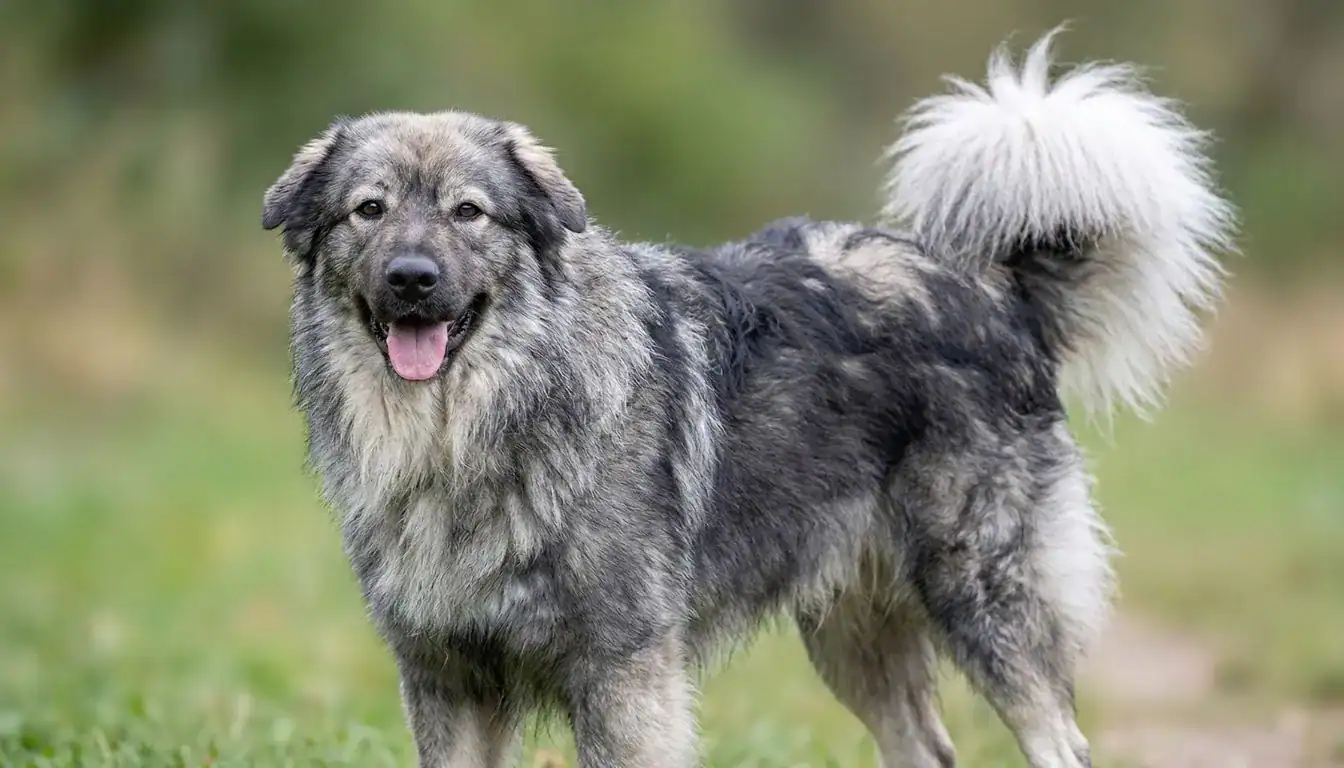
The Karst Shepherd is not a generic livestock guardian. It is a rare Slovenian sheepdog, a working breed of dog shaped by the rocky pastures and predators of the Karst region.
Most people see a medium sized but powerful guardian with an iron grey coat, strong pigmentation, and a calm expression. What they do not see at first glance is the slow burning suspicion, territorial focus, and willingness to confront anything that threatens flock or family.
This guide explains what it really means to live with a Karst Shepherd, from temperament and health to training based on mutual respect, space needs, and breeder standards, so you can decide if this shepherd’s dog fits your land and lifestyle.
Affiliate Disclosure: K9Sphere is a participant in the Amazon Services LLC Associates Program. As an Amazon Associate, I earn from qualifying purchases made through links in this article at no extra cost to you.
All About Karst Shepherd
📊 Vitals and Life Span
Height
21.5-24.5 inches (55-62 cm)
Weight
55-92 lb (25-42 kg)
Life Expectancy
11-12 years
AKC Group
Foundation Stock Service
Origin
Slovenia
🇸🇮
⭐ Personality Traits
Ratings (1 to 5). This is an independent, highly protective guardian breed.
History and Origins
The Karst Shepherd is a traditional Slovenian livestock guardian that developed in the stony Karst plateau. This rare breed of dog was shaped by centuries of work in harsh terrain rather than by show rings.
This mountain sheepdog was developed to move with the flock and stand between predators and livestock. For several centuries, nomadic herders relied on them to navigate the harsh landscapes.
📌 1939: Official Recognition
The dogs are officially recognized by international kennel clubs, but they are classified simply as the Illyrian Shepherd alongside the Sarplaninac.
📌 1968: Breed Separation
The central registry officially separates the dogs from the Pivka region from those further south. This formally establishes the independent Karst Shepherd dog breed.
📌 2006: UKC Acceptance
The United Kennel Club formally recognizes the breed. They remain a rare and highly respected flock protector globally.
Physical Characteristics
A Karst Shepherd presents a harmonious and robust silhouette. The Karst Shepherd is a medium sized but very substantial guardian, heavier-boned than many other herding breeds. They have a strong constitution built for endurance.
The most striking feature is their coat pattern. The fur is an intense iron grey that transitions into light grey or sandy shading on the lower legs.
🎨 Face and Markings
A distinctive black mask covers the muzzle. Strong, dark pigmentation around the eyes and lips protects the face and gives the dog its serious expression. Some dogs feature subtle chestnut or dark brown hints near the face.
🦴 Structural Strength
Their dentition is complete with a powerful scissor bite. Straight forequarters and a heavily muscled hindquarter drive a powerful, elastic gait. A slight dewlap on the neck adds to their imposing presence.
Their thick coat is incredibly functional. A dense undercoat provides insulation against freezing temperatures. A longer topcoat forms a pronounced mane around the wither, while the tail acts like a thick brush sweeping down past the hocks.
Temperament
This dog is not a golden retriever in an iron grey suit. They are an independent flock protector first and foremost. The bond between this dog and its handler works best as a shepherd’s partnership built on clear rules and consistency.
They are utterly fearless when confronting predators and thieves. Their primary job is to establish a secure perimeter and act without waiting for human permission.
This deep individuality makes them an incredible working partner but a massive challenge for the average family. They are a serious guard dog that requires absolute mutual respect.
💡 The “Distrustful” Standard
The reality: The breed standard explicitly states they are distrustful of strangers. This is not a flaw. An effective guardian must view unfamiliar people with skepticism. They are deeply devoted to their family but demand formal introductions before accepting anyone new.
I learned the reality of managing a highly protective dog early on. My rescue dog Moti attacked someone who entered our yard unexpectedly. That incident forced me to step up as a firm leader. I instituted clear rules and rewarded calm behavior around visitors.
A Karst Shepherd operates on that exact same wavelength. If you do not provide confident leadership, they will assume the role of deciding who is allowed near your property. They are incorruptible and take their security duties very seriously.
Health Considerations
Veterinary Disclaimer: The information provided in this article is for educational purposes only and is not intended as a substitute for professional veterinary advice, diagnosis, or treatment. Always consult a licensed veterinarian for any health concerns about your pet.
Health Information Sources: Health data compiled from:
- UKC: Official breed standard and health guidelines
- CHIC: Recommended screening protocols for large guardian breeds
Always consult your licensed DVM for personalized medical advice.
Because they have not been subjected to extreme commercial breeding, Karst Shepherds are generally very healthy dogs. They maintain the strong constitution required for demanding mountain living.
🔴 Hip Dysplasia
What it actually is: Like many robust working dogs, their structural frame makes them vulnerable to joint malformations. Dysplasia causes severe arthritis and compromises their powerful gait.
Screening: Responsible breeders must provide OFA or PennHIP certifications for both parents. You must never purchase a young dog without seeing joint health clearances.
Management: Keep them lean throughout their life. Extra weight accelerates joint deterioration significantly.
🟡 Skin and Coat Issues
What to watch for: Their heavy inner layer can easily trap moisture and hide developing hot spots. Fungal and bacterial infections thrive under a dense, unbrushed coat.
Screening: Check their skin thoroughly down to the base during your weekly brushing sessions.
My heavy-coated Labrador Bruno battled recurring fungal skin infections every single rainy season in our humid climate. A Karst Shepherd is even more susceptible to trapped moisture if forced to live in hot, tropical areas.
General Care
A Karst Shepherd is relatively low-maintenance when kept in an appropriate, cool climate. They do not require professional grooming appointments or intricate trimming.
You must brush them weekly to prevent mats from forming in the mane or on the front of the legs. Twice a year, they will blow their inner coat in massive clumps. During these shedding events, daily brushing with a specialized tool is absolutely mandatory.
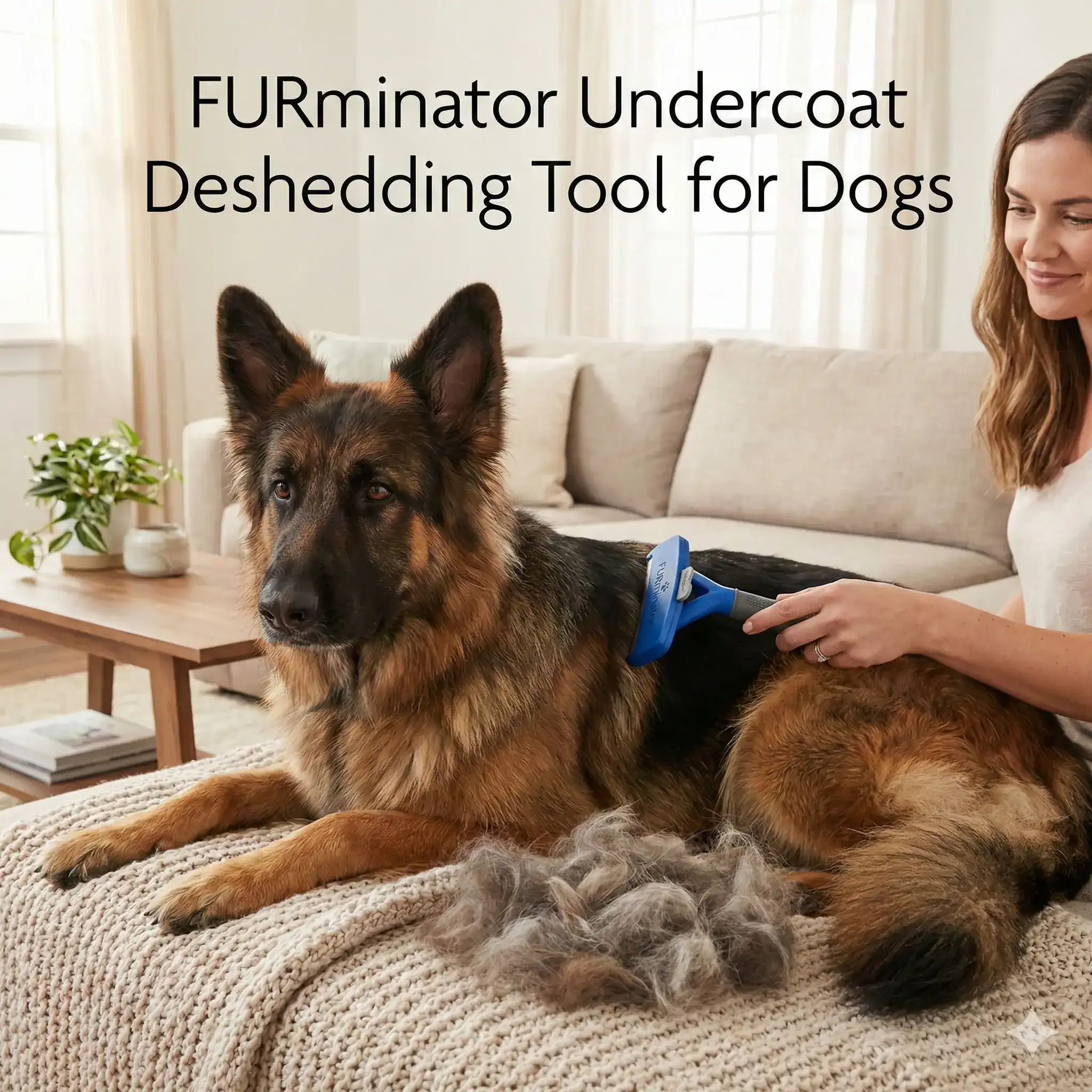
FURminator Undercoat Deshedding Tool for Dogs
Use for: Removing loose inner hair before it covers your furniture, reducing shedding by up to 90%, and keeping double-coated breeds comfortable during heavy shedding seasons.
View on AmazonBathing should be a rare occurrence. Their coat naturally repels dirt and debris. Stripping their natural oils with frequent baths will ruin their critical weather resistance.
Nutrition & Diet
A working Karst Shepherd needs premium fuel to maintain their endurance. You must match their caloric intake directly to their daily activity level.
🐶 Puppy Stage: Feed a strict large-breed growth formula. Rapid growth places too much strain on their developing joints. You want slow, controlled growth to minimize dysplasia risks later in life.
🐕 Adult Stage: Measure their food exactly. If your dog is actively patrolling property or herding livestock, their caloric needs will spike. If they are living a more sedentary life, you must restrict their intake strictly to prevent joint-destroying obesity.
🐕🦺 Senior Stage: Transition to a high-quality senior diet that supports joint health and kidney function. Adding omega-3 fatty acids helps maintain their thick coat and lubricates aging joints.
Training
You do not train a Karst Shepherd through blind repetition. They are bred for independent problem-solving.
If you ask them to fetch a ball twenty times, they will eventually make it very clear they see no point in continuing. Training is built on mutual respect instead of blind obedience; forceful methods quickly damage trust with this dog.
Early, intense socialization is non-negotiable. You must expose a Karst Shepherd youngster to hundreds of neutral people and environments so they learn the difference between a delivery driver and an actual threat.

No Pull Dog Harness, Collar & Leash Set
Use for: Strong, enthusiastic pullers that drag owners on walks. Essential for maintaining physical leverage over a powerful, 90-pound guardian breed during early training.
View on AmazonCommon Questions About the Karst Shepherd
Is the Karst Shepherd good for first-time owners?
Direct Answer: No. They require extensive experience with independent, protective breeds.
Context: This is an incorruptible guard dog that makes its own decisions. A novice owner will easily be overwhelmed by their strength, independence, and natural suspicion of strangers. They require a confident handler who understands mountain guardian psychology.
Management: If you love the look but lack the experience, consider a more trainable, eager-to-please breed like a standard German Shepherd.
Are they aggressive?
Direct Answer: They are highly protective, not mindlessly aggressive.
Context: The breed is naturally distrustful of strangers because their job is to keep predators and thieves away. They will escalate if a perceived threat ignores warnings. A poorly socialized Karst Shepherd is a severe liability, but a well-raised one is a stable protector.
Management: Commit to daily, structured socialization for the first two years of the dog’s life.
Can they live in hot climates?
Direct Answer: No. They are built for the harsh, cold mountains of Slovenia.
Context: The Karst Shepherd has a dense undercoat and a heavy iron grey topcoat. Taking this breed into hot, humid environments forces them into constant physical distress and increases the risk of severe skin infections.
Management: Only keep this breed if you live in a temperate or cold climate where they can work comfortably outdoors.
What is the difference between a Karst Shepherd and a Sarplaninac?
Direct Answer: They share a common ancestor but are separated by geography and size.
Context: Both were originally called the Illyrian Shepherd. The Karst Shepherd hails from the Pivka region of Slovenia and is generally slightly smaller and lighter than the Sarplaninac. Their head shape and specific shading also differentiate them.
Management: Both require similar handling and respect as serious working guardians.
Do they bark a lot?
Direct Answer: Yes. Alert barking is their primary tool for keeping predators away.
Context: A mountain guardian works by vocalizing to warn off threats before engaging physically. They will bark at unfamiliar sounds, passing animals, and strangers approaching their territory. You cannot train this instinct completely out of them.
Management: They are not suitable for apartments or dense suburban neighborhoods with strict noise ordinances.
Are they safe around children?
Direct Answer: They are fiercely devoted to their own family’s children, but caution is required with visitors.
Context: Because they bond so tightly to their flock, they will protect family children endlessly. The danger arises when visiting children play roughly. The dog may misinterpret normal childhood wrestling as an attack on their family.
Management: Never leave a powerful guard dog unsupervised with visiting children, no matter how reliable they seem.
How much exercise do they need?
Direct Answer: Moderate physical exercise, but immense mental stimulation through territory patrol.
Context: They are not hyperactive dogs that need to run for miles. They conserve their energy to engage threats. However, they need a large, secure space to patrol. Being locked in a small room destroys their mental health.
Management: Provide acreage or a very large, securely fenced yard where they can fulfill their genetic drive to monitor the perimeter.
Do they get along with other dogs?
Direct Answer: They are highly territorial and prone to same-sex aggression.
Context: A Karst Shepherd will generally tolerate dogs raised within their own family pack. However, they view strange dogs entering their territory as a direct threat. They are not candidates for off-leash dog parks.
Management: If keeping multiple dogs, opposite-sex pairings are much safer. Secure fencing is mandatory.
Karst Shepherd: Quick Reference
| Attribute | Karst Shepherd | Best For | Not Ideal For |
|---|---|---|---|
| Exercise | Moderate / Constant Patrol | Rural properties, Farms | Apartments, Cities |
| Guarding | Extreme / Independent | Experienced handlers | Novice dog owners |
| Climate | Cold / Temperate | Northern climates | Hot, humid regions |
Finding a Puppy
Locating a purebred Karst Shepherd prospect requires immense patience. They are primarily bred in Slovenia and surrounding European nations. Finding one in most global markets is extremely difficult.
🔬 The Responsible Breeder
A verified breeder will provide public OFA certificates for hips and elbows. They actively study pedigrees to maintain working ability. They will interrogate your lifestyle, fencing, and experience before handing over an incorruptible guard dog.
🏠 Rescue and Adoption
Rescue opportunities are almost nonexistent outside their native region. When large guardian breeds do end up in rescue, it is usually because an unprepared owner underestimated their protective instincts and territorial needs.
🚩 Red Flags When Buying
- Breeder cannot provide verified OFA hip and elbow scores
- Selling litters as “easy family pets” for any environment
- No waiting list or constant availability
- Breeder does not ask about your fencing or property size
- Litters are sent home before eight weeks of age
Personal Observation
💭 Personal Observation
I haven’t owned a Karst Shepherd, but I live with dogs that share their exact same protective psychology. My rescue dog Chun Chun is an intense alarm barker who spends hours patrolling our yard. Her constant vigilance requires active management, but her natural instinct provides brilliant early warnings. A Karst Shepherd shares that intense environmental awareness, but with the added power of a massive frame. Understanding the difference between a dog that wants to please you and a dog that feels obligated to protect you is critical. Do not acquire a dog of this type unless you have a completely secure compound and the physical strength to manage a dog that refuses to retreat.
The Bottom Line
The Karst Shepherd is a magnificent piece of living history. They survived several centuries by being utterly devoted to their flocks and absolutely ruthless toward threats.
They bring a melancholic beauty and a strong constitution to any rural property. But they demand an owner who respects their deep individuality. They will not bend to casual suburban living.
If you need a partner to patrol an acreage and deter predators, they are unmatched. They repay your confident leadership with an unbreakable, fearless loyalty.
Disclaimer: This article is for informational and educational purposes only. It does not constitute veterinary advice, medical diagnosis, or treatment recommendations. Always consult a licensed veterinarian before making health-related decisions for your pet. Product recommendations are based on the author’s research and experience; individual results may vary. As an Amazon Associate, K9Sphere earns from qualifying purchases at no additional cost to you.


