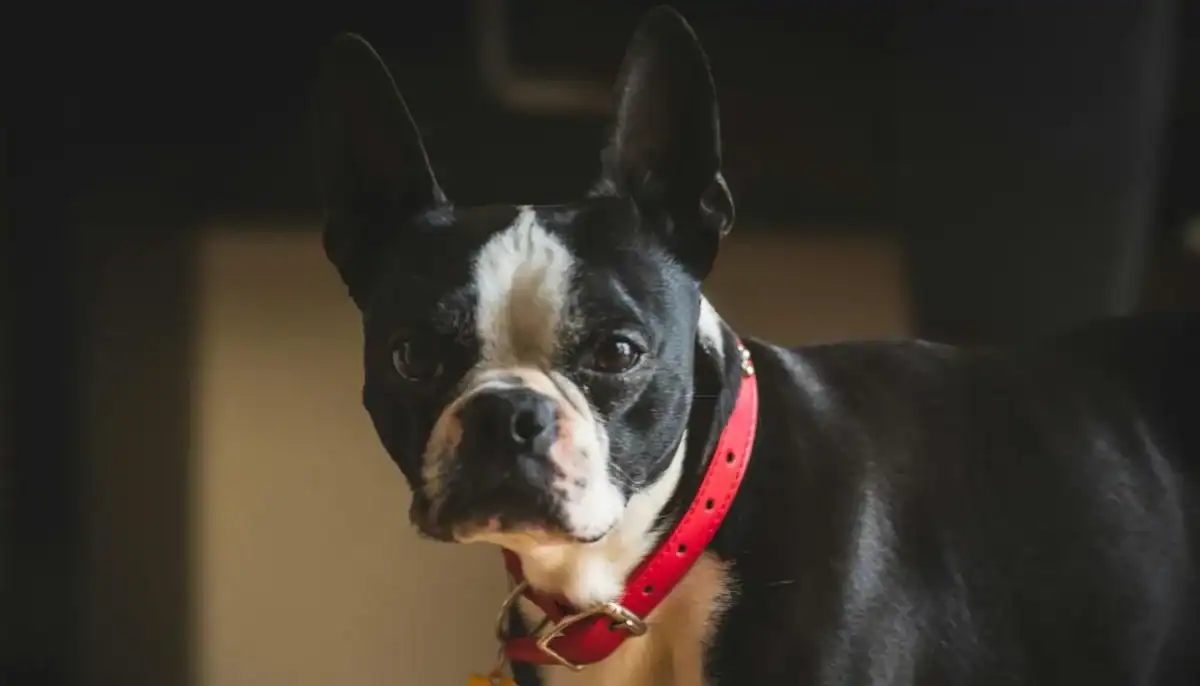
The Boston Terrier is a true United States original, developed in the late nineteenth century and bred down from heavier fighting ancestors into the sleek, tuxedo-patterned companion recognized today. Compact, sturdy, and unmistakable in its black, brindle, or seal coat with crisp white markings, it carries itself with the polished air that earned the nickname “The American Gentleman.”
What draws most people to the breed is personality rather than size. Boston Terriers are alert, affectionate, and deeply people-focused, happiest when they are part of whatever the household is doing. They tend to be friendly with strangers and other pets, adapt easily to apartments or houses, and fit into family life with very little fuss, which is a large part of why they have stayed popular for more than a century.
What follows is a full Boston Terrier breed guide, from temperament and training to the health realities of a flat-faced dog. The breed standard from the American Kennel Club, health guidance from the Boston Terrier Club of America, and general veterinary literature all inform the sections below.
In practice, that personality makes the Boston a realistic choice for first-time owners and city dwellers alike. It is a low-grooming, moderate-energy dog that asks for company and sensible day-to-day care rather than space or stamina.
It is not the right dog for every home, though. The same flat face that gives the breed its charm also brings real heat sensitivity and breathing limits, so households without reliable cooling, and owners hoping for a jogging or hiking partner, should think carefully before choosing this breed.
Affiliate Disclosure: K9Sphere is a participant in the Amazon Services LLC Associates Program. As an Amazon Associate, K9Sphere earns from qualifying purchases made through links in this article at no additional cost to you. Product recommendations are based on independent research and editorial judgment, not paid placement.
Breed Snapshot
📊 Vitals and Lifespan
Height
15–17 in (38–43 cm)
Weight
12–25 lb (5–11 kg)
Lifespan
11–13 years
Breed Group
Non-Sporting Group
Origin
United States
🇺🇸
⭐ Personality Traits
Ratings are from 1 to 5 and reflect typical adult traits.
History and Origin
The Boston Terrier began in late nineteenth-century Massachusetts, USA. Breeders wanted a smaller city dog with courage and a more companionable temperament.
📌 1870s: The Foundation Cross
A Boston resident named Robert C. Hooper acquired a dog named Judge. Hooper’s Judge was a bull and terrier type, a cross between an English Bulldog and a white English terrier, and he became the direct ancestor of almost all modern Boston Terriers.
📌 1891: The Boston Terrier Club
Enthusiasts first organized in 1889 as the American Bull Terrier Club, and the early dogs were nicknamed round heads or bull terriers. That name drew objections from existing breed fanciers, so by 1891 the group became the Boston Terrier Club and shifted the focus away from fighting traits toward an engaging companion dog.
📌 1893: Official Recognition
The American Kennel Club granted official recognition to the breed, making the Boston Terrier the first American breed the registry recognized. Since then, the Boston Terrier Club of America has maintained the standard for the tuxedo-patterned companion known worldwide today.
Physical Characteristics
The Boston Terrier has a distinctive, compact build. The body is sturdy and well-proportioned with straight legs and a slightly arched neck, and the head is square and flat on top with a short muzzle.
🎨 The Tuxedo Coat
A short coat lies smooth and fine against the skin. White markings are a strict requirement in the breed standard, and they must include a white muzzle band, a white blaze between the eyes, and a white chest. The primary color can be black, brindle, or seal.
🏗️ The Flat Face
Boston Terriers are brachycephalic dogs, sharing the shortened muzzle seen in breeds like the Pug. The large, round eyes are set wide apart and add to their expressive look. This shape also means owners must be careful with heat and hard exercise.
Character and Personality
Boston Terriers are known as “The American Gentleman,” a nickname earned by their polished, friendly nature.
🛡️ Social Companion
Boston Terriers form strong bonds with their people and are generally welcoming to strangers and visitors when properly socialized.
🔥 Independent Streak
While they are eager to please, a stubborn streak can surface during routine tasks. If training gets repetitive, they may tune out, so positive motivation works best to get past that minor obstinance.
💪 Isolation Limits
Their strong bond can make time alone difficult, and some dogs show separation distress. A Boston left alone for long workdays may develop stress behaviors like excessive barking or indoor accidents. They do best where someone is home fairly often. Most can still manage a standard workday if they are eased into alone-time gradually, but a regular ten-hour absence is too much for the breed.
🧠 Alert Observers
They are generally quiet dogs, but they will bark to announce a knock at the door. Their intelligence shows in obedience work, where they quickly learn patterns and routines.
Screening and Conditions
Veterinary Disclaimer: The information in this article is for educational purposes only and is not a substitute for professional veterinary advice, diagnosis, or treatment. K9Sphere’s authors are experienced dog owners, not licensed veterinarians. Always consult a qualified DVM regarding any health concerns about your pet. Never disregard professional veterinary advice or delay seeking it because of something you have read on this site.
Health Information Sources: Data compiled from:
- American Kennel Club breed reference and standard
- Boston Terrier Club of America CHIC-required screening protocols
- Orthopedic Foundation for Animals (OFA) patellar and eye evaluations
Always consult your licensed DVM for personalized medical advice.
The Boston Terrier’s flat face and prominent eyes call for routine attention from the owner.
Common Health Risks
🔴 Brachycephalic Airway Syndrome
What to watch for: Noisy breathing, exercise intolerance, fainting after mild activity, and heavy panting even in moderate temperatures. The shortened nose restricts airflow and makes it harder for the dog to cool down naturally.
Screening: A vet can assess airway narrowing early and advise whether surgery is needed. A harness is gentler on the airway than a collar.
🔴 Corneal Ulcers
What to watch for: Squinting, excessive tearing, redness, or pawing at the eye. The prominent eyes sit relatively unprotected on the face and are susceptible to scratches from bushes, cat claws, or rough play.
Screening: Responsible breeders can show current eye-screening results for the parents. Any sign of eye irritation needs prompt veterinary attention, since an untreated ulcer can lead to vision loss quickly.
🟡 Patellar Luxation
What to watch for: A sudden skip in the dog’s step, lifting one hind leg while running, or a bunny-hopping gait. The kneecap slips out of its groove temporarily and then pops back into place.
Screening: OFA patellar evaluation is a recommended test for breeding dogs. A lean body weight helps protect the knees, and severe cases may need surgical repair.
🟡 Congenital Deafness
What to watch for: Puppies that fail to startle at loud noises or respond inconsistently to verbal commands. This condition is linked to the white pigmentation patterns in the coat.
Screening: BAER testing is a smart screening step for puppies, since a dog can be deaf in one or both ears.

Oxyfresh Premium Pet Dental Care Solution
Use for: Supporting oral hygiene in brachycephalic dogs with crowded teeth. Adding this tasteless solution to the water bowl helps control plaque and freshen breath between veterinary dental cleanings.
Check price on AmazonGrooming and Coat Care
The short coat needs only a weekly brush with a soft bristle tool or a rubber hound mitt to remove dead hair and distribute natural skin oils.
They do not shed a lot compared with many breeds. A shedding brush used once a week keeps stray hairs off the furniture. Bathe the dog only when it gets muddy or starts to carry an odor, since over-bathing strips the natural oils and leads to dry skin.
Boston Terriers have fairly shallow facial folds compared with breeds like the French Bulldog, but any creases around the nose and eyes still benefit from a wipe with a damp cloth a couple of times a week. Dry them thoroughly afterward to prevent skin irritation.
Exercise and Living Needs
Boston Terriers have moderate energy and suit city or suburban homes.
They should live indoors, and in summer the walks belong in the early morning or late evening rather than the midday heat.
Their small size and quiet nature make them excellent apartment dogs, provided the owner meets the social needs covered earlier. For long workdays, a way to check in on the dog helps.

Furbo 360° Dog Camera
Use for: Monitoring a companion dog prone to isolation stress. The two-way audio lets you reassure an anxious dog remotely, while the 360-degree view helps you confirm they are safe and settled when left alone.
Check price on AmazonNutrition & Diet
Boston Terriers can have sensitive stomachs and often eat too quickly. A high-quality commercial kibble designed for small breeds provides the right nutrient balance and a suitable bite size.
Flatulence is often linked to swallowed air during meals and a sensitive digestive tract. Splitting the daily food allowance into two or three smaller meals reduces the air intake, and slow-feeder bowls encourage a more deliberate eating pace.
Extra weight can make breathing problems worse. Measure meals precisely rather than free-feeding, and keep treat allowances small and counted into the daily calorie total. Some owners add a joint supplement on veterinary advice as the dog ages, though diet quality matters most.
Training
Boston Terriers want to please but can shut down under harsh corrections. Positive reinforcement with high-value food rewards and enthusiastic praise delivers the best results.
Early Socialization
A well-socialized puppy grows into an adaptable companion that handles city noises and frequent house guests without fear.
Obedience Basics
Short sessions of five to ten minutes keep the dog from getting bored and stubborn.
Crate Routines
Crate training helps with housebreaking and gives the dog a safe space. Introduced gradually and positively, a crate can also ease time alone. Never use it as a punishment.
Boston Terrier vs French Bulldog vs Bulldog vs Chihuahua
Prospective owners comparing small companion breeds often weigh the Boston Terrier against the French Bulldog, the English Bulldog, or the Chihuahua. The differences make it easier to match the dog to the right lifestyle.
| Attribute | Boston Terrier | French Bulldog | Bulldog | Chihuahua |
|---|---|---|---|---|
| Weight | 12–25 lb (5–11 kg) | 16–28 lb (7–13 kg) | 40–50 lb (18–23 kg) | 2–6 lb (1–3 kg) |
| Original Purpose | Companion | Companion | Bull baiting | Companion |
| Energy Type | Lively bursts | Low, short bursts | Low, steady | Alert, quick |
| Trainability | Eager but stubborn | Stubborn | Independent | Smart but willful |
| Grooming | Weekly brush | Weekly brush | Weekly brush | Weekly brush |
| Reaction to Strangers | Alert bark | Quiet observation | Intimidating stance | Vocal alarm |
| First-Time Owner? | Yes | Yes | With research | Yes |
| Common Health Risks | Brachycephalic syndrome, corneal ulcers, patellar luxation | Brachycephalic syndrome, spinal disorders, allergies | Brachycephalic syndrome, hip dysplasia, skin fold dermatitis | Patellar luxation, dental disease, heart issues |
| Living Space | Apartment friendly | Apartment friendly | Apartment friendly | Apartment friendly |
Common Questions about the Boston Terrier
What is a Boston Terrier?
Direct Answer: The Boston Terrier is a small American companion breed known for its tuxedo-patterned coat and friendly, people-focused nature.
Context: Bred down from bull-and-terrier ancestors in 1870s Boston, it became the first American breed the AKC recognized, in 1893. Despite the name, the Boston Terrier is classified by the AKC in the Non-Sporting Group rather than the Terrier Group. Its nickname is “The American Gentleman.”
Management: Treat it as an indoor companion that needs moderate exercise, climate care for its flat face, and regular human company.
What breeds make a Boston Terrier?
Direct Answer: The breed descends from a cross between the English Bulldog and the now-extinct white English Terrier.
Context: Almost all modern Bostons trace back to a single dog named Judge, owned by Robert C. Hooper of Boston in the 1870s. Selective breeding then reduced the size and softened the temperament into today’s companion.
Management: When buying, ask the breeder about lineage and health-tested parents rather than focusing on rare colors, which fall outside the standard.
How big does a Boston Terrier get?
Direct Answer: Adults stand about 15 to 17 inches tall and weigh between 12 and 25 pounds.
Context: The AKC divides the breed into weight classes under 25 pounds, so size varies noticeably from one dog to the next. They are compact but sturdy rather than fragile.
Management: Keep your dog at the lean end of its natural range, since extra weight worsens the breathing and joint issues common to the breed.
Is a Boston Terrier a good family dog?
Direct Answer: Yes. They are affectionate, sturdy, and adaptable, which makes them a strong choice for families.
Context: Their playful nature suits children, and their small size fits apartments and houses alike. They do best when the household is around often rather than gone all day.
Management: Teach every kid to respect the dog’s space, and supervise toddlers to protect the dog’s prominent eyes during play.
How much does a Boston Terrier cost?
Direct Answer: Expect USD 1,200 to USD 2,500 for a puppy from a reputable breeder. Pricing varies by country, with UK, Canada, and Australia rates differing.
Context: Breeding brachycephalic dogs involves significant veterinary expense, often including cesarean delivery, which raises the initial price. The larger cost frequently comes later in veterinary care.
Management: Budget for pet insurance from the start. A single emergency visit for a corneal ulcer can easily exceed the purchase price of the dog.
What are the pros and cons of a Boston Terrier?
Direct Answer: The main pro is an affectionate, low-grooming, apartment-friendly companion; the main con is the health burden of a flat-faced breed.
Context: On the plus side they are friendly, trainable, and moderate in energy. On the downside they are prone to breathing trouble, eye injuries, heat sensitivity, and stress when left alone too long.
Management: If you can provide climate control, human company, and a veterinary budget, the trade-offs are very manageable for most owners.
How long do Boston Terriers live?
Direct Answer: A healthy Boston typically lives 11 to 13 years.
Context: That is a solid lifespan for a brachycephalic breed. The quality of the senior years depends heavily on keeping the dog lean to protect its airways and joints.
Management: Keep up annual vet exams, prioritize dental care, and manage weight strictly throughout life.
Why do Boston Terriers fart so much?
Direct Answer: Their flat face leads them to swallow air while eating, and they have naturally sensitive digestive tracts.
Context: Brachycephalic dogs gulp extra air at mealtimes, which is later passed as gas. A rich or low-quality diet makes it worse.
Management: A high-quality diet, smaller portions, and a slow-feeder bowl all help, as covered in the nutrition section.
Which is better, a French Bulldog or a Boston Terrier?
Direct Answer: Neither is better overall; Bostons are leaner and more active, while French Bulldogs are heavier and more sedate.
Context: Both are brachycephalic companions, but the Boston carries a bit more agility and stamina and stands taller, while the Frenchie is stouter with prominent bat ears.
Management: Choose the Boston for longer walks and playful fetch; choose the French Bulldog for a lower-energy companion with a heavier build.
Can Boston Terriers be left alone?
Direct Answer: Yes, but they do best with some company during the day and can struggle with long absences.
Context: A ten-hour workday in an empty house can create anxiety that sometimes shows up as destructive chewing or indoor toileting.
Management: Build alone-time gradually from puppyhood, and line up a dog walker or daycare for the longest days.
Finding a Puppy
Buying Boston Terrier puppies takes extra care, because a flat-faced breed carries health considerations from day one.
🏠 Responsible Breeders
A trustworthy breeder tests their adult dogs for patellar luxation, hereditary eye disease, and BAER hearing before breeding. They will gladly show you where the puppy was raised and let you meet the mother, and they avoid pushing extreme flat faces or noisy breathing. If you cannot find a responsible breeder near you, a breed club referral is worth the wait.
🐾 Rescue and Adoption
Many breed-specific rescue organizations place adult Bostons into new homes, and you can often adopt a dog whose adult temperament and breathing capacity are already known, which makes adoption an excellent option for a first-time owner.
🚩 Red Flags to Watch For
- Puppies advertised for sale at a price far below the market average.
- No documentation of eye exams or OFA patellar checks for the parents.
- Puppies with extremely pinched nostrils or noisy breathing at rest.
- Refusal to let buyers visit the home or meet the parent dogs.
- Nonstandard colors marketed as rare or premium.
Personal Observation
💭 Personal Observation
Rambo, one of my rescues, needs real outdoor exertion before he settles indoors, so life with him naturally revolves around activity. The appeal of a Boston Terrier feels very different. This is a dog that seems happiest with a moderate walk and then a long stretch of close company indoors. The one thing I would take seriously is heat management. Even with my own dogs, warm-weather walks happen during the coolest parts of the day, and for a flat-faced breed that habit becomes even more important. If your ideal dog is one happy to stay close after a manageable amount of exercise, it is easy to see the appeal.
Conclusion
Boston Terriers are devoted housemates that suit apartments, busy households, and active social homes equally well. They ask for very little space, shed lightly, and stay genuinely tuned in to the people around them, which is exactly why the breed has held its place as an American favorite for well over a century. For the right owner, that easy companionship is the whole appeal.
The trade-off for that charming personality is the physical reality of a flat face. The care points covered above are not difficult once they become routine, but they do ask for an owner who is paying attention rather than one who expects a hands-off dog.
If you can meet those needs and budget for the veterinary care a brachycephalic breed can require, the Boston Terrier rewards that effort with an affectionate, adaptable companion. If those limits feel like a stretch, a sturdier or less heat-sensitive small breed such as the Chihuahua may be a lower-risk option worth weighing first.
📋 Before bringing one home, run this 4-step pre-buying check
- Climate match. Do you have air conditioning for hot summer months?
- Time commitment. Are you ready for a dog that forms intense bonds and dislikes long isolation?
- Veterinary budget. Can you afford potential specialized care for flat-faced breathing or eye issues?
- Activity alignment. Are you looking for a moderate walking partner rather than a marathon runner?
If several answers are no, the breed may not be the best match.
Editorial Disclaimer: This article is for informational and educational purposes only. It does not constitute veterinary advice, medical diagnosis, or treatment recommendations. Always consult a licensed veterinarian before making health-related decisions for your pet.
Accuracy Notice: While every effort has been made to ensure the information presented here is accurate and current, breed information evolves and individual dogs vary. If you spot a factual error or have updated information from a verified source, please contact us so we can review and update.
Product Disclosure: Product recommendations are based on independent research and editorial judgment. Individual results may vary. As an Amazon Associate, K9Sphere earns from qualifying purchases at no additional cost to you.
Last reviewed: May 2026. Article reviewed for accuracy on the date shown above.